Ein Gastvortrag von Theresa Heyd an der Universität Bern
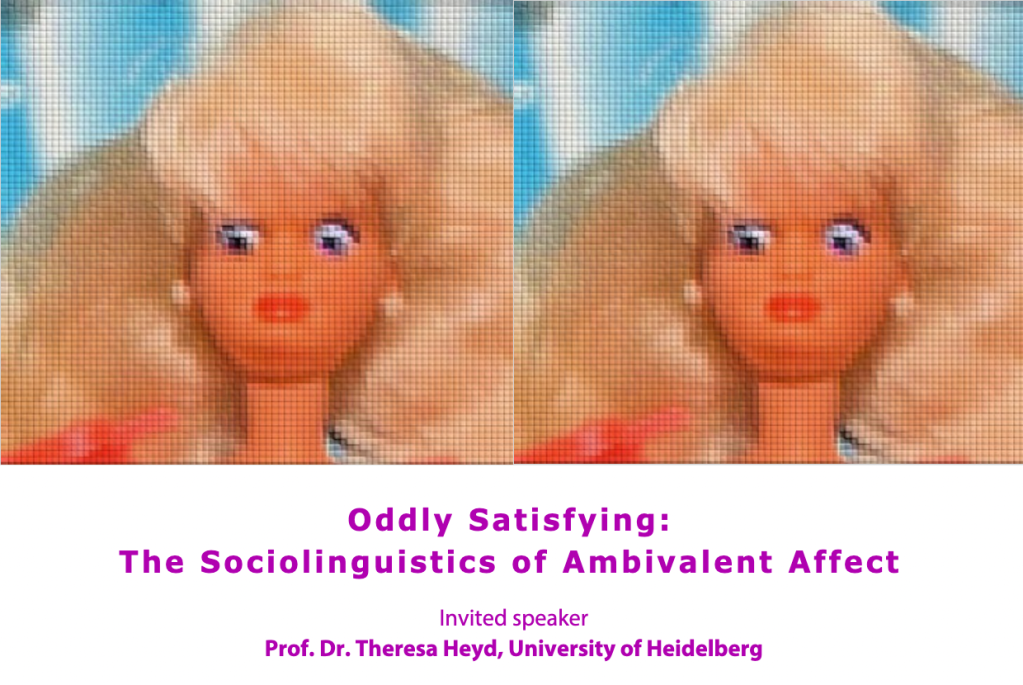
If awkwardness has emerged as an important cultural category in recent years (Plakias 2024, Berkers and Wijngaarden 2025), then cringe is its popular linguistic formulation. Cringe is a core element of digital linguistic practice, used in metadiscursive framing, as a genre label in Try Not To Cringe compilations, and as a multimodal, embodied item in reaction pics and memes. In line with others, we have described cringe as an ambivalent affect of awkwardness that is uncomfortable, yet enjoyable and consumable (Heyd and Volkening 2025). The ambivalence of affective cringe practices seems to be particularly useful for doing sociolinguistic boundary work: diagnoses of cringe bring forth communities of taste, and the discursive work of distinction done around cringe very often plays out along lines of gender, class and age.
In this talk, we will look into ambivalent affect and some of its sociolinguistic detail in digital discourse more broadly. Taking cringe as a starting point, I want to discuss a number of digital practices and phenomena that encapsulate ambivalent affect in their vernacular names: epic fails, humblebragging, unpopular opinions, oddly satisfying videos, hate-reading and hate-watching, guilty pleasures. We will explore examples both of the performance of these discursive practices of communal consumption, and of the contexts of use for the metalinguistic labels. I argue that the ambivalent affect expressed in these digital practices is more than just the use of negative polarity items for intensification (as in constructions like fucking amazing, Nouwen 2024) and forms, in fact, an element of pleasure that constitutes their popularity. With Lauren Berlant, we can understand such digital practices of ambivalent affect as affective genres, “an aesthetic structure of affective expectation, an institution or formation that absorbs all kinds of small variations or modifications while promising that the persons transacting with it will experience the pleasure of encountering what they expected” (Berlant 2008: 4). In my conclusion, I connect this interpretation of ambivalent affect in digital linguistics to ongoing debate about incorporating notions of vernacular aesthetics into our sociolinguistic reasoning (Ngai 2004, Meyerhoff & Mendoza-Denton 2022)
Berkers, P., & Wijngaarden, Y. (2025). A Sociology of Awkwardness: On Social Interactions Going Wrong. Routledge.
Berlant, L. (2008). The Female Complaint: The Unfinished Business of Sentimentality in American Culture. Duke University Press.
Heyd, T. & Volkening, H. (2025). #cringe. Geschichte der Gegenwart. https://geschichtedergegenwart.ch/cringe/
Meyerhoff, M., & Mendoza-Denton, N. (2022). Aesthetics in Styles and Variation: A Fresh Flavor. Annual Review of Anthropology, 51(1), 103-120.
Ngai, S. (2004). Ugly feelings. Harvard University Press.
Nouwen, R. (2024). The Semantics and Probabilistic Pragmatics of Deadjectival Intensifiers. Semantics and Pragmatics, 17, 2-EA.
Plakias, A. (2024). Awkwardness: A Theory. Oxford University Press.
 UEBER CRINGE